


Solar Panels for Greenhouse
Home / blogs
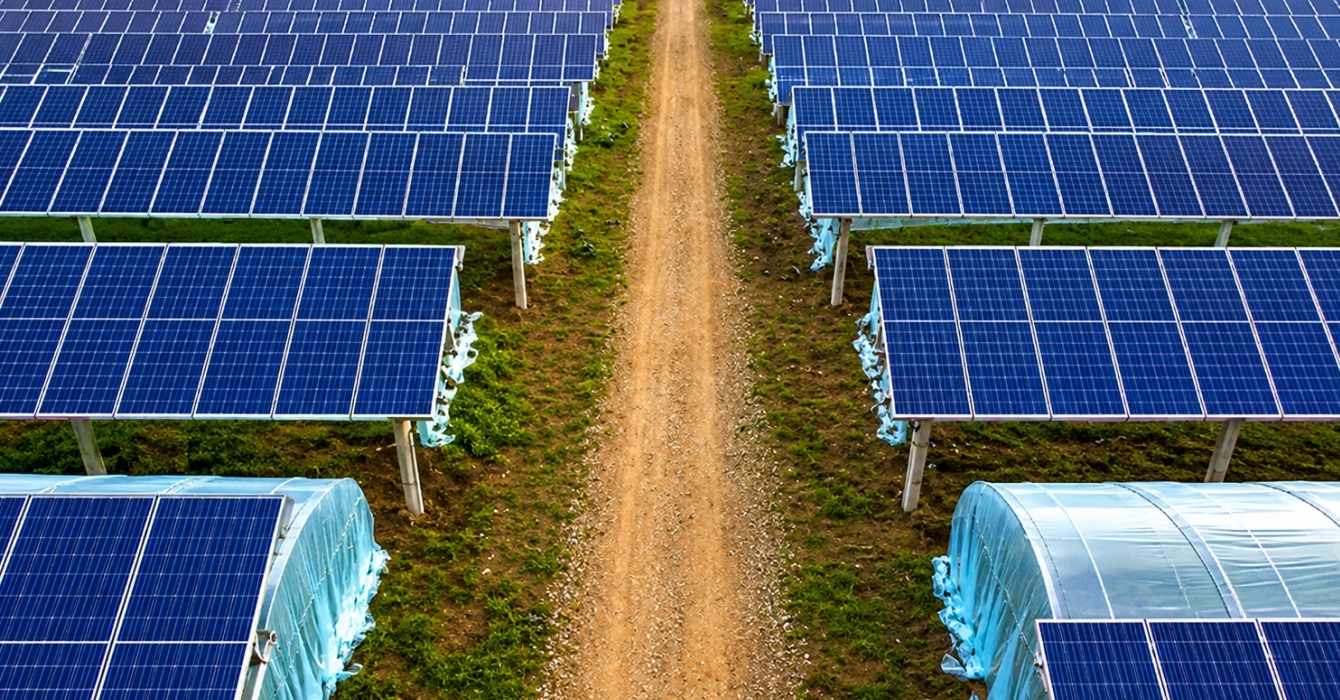
The universal truth that “the main energy source for life on Earth is the Sun” is one we have all heard many times throughout our lives. It goes without saying that we must conserve the energy that the sun gives, especially in our technologically evolved civilization.
Solar panels, which are used by both families and businesses, have long been used to gather solar energy. However, have you ever thought about combining farming with solar power? With greenhouses, farming is possible all year round. But since they have to stay at the right temperature all year round, they usually require a lot of energy. They also have a number of always-operating gadgets. Solar panels for greenhouses are thus more effective in this industry.
The use of solar technology in agriculture has increased in recent years. This method yields healthier plants and reduces carbon emissions.
So interesting, isn’t it? All this is possible with solar panels for greenhouses. So, before we move ahead to understand how it works let us understand solar greenhouse;
What is a Solar Greenhouse?
The word “greenhouse” itself has to be defined clearly in order for us to comprehend a greenhouse with solar panels.
A greenhouse is, in its most basic form, a glass building used to cultivate plants in harsh weather. By absorbing light, a greenhouse may control its temperature without the need for complex, energy-intensive heating equipment. It facilitates the growth of plants that need a controlled temperature.
A building with solar panels installed is called a solar energy greenhouse. They gather solar light and convert it to thermal energy. It offers the ideal conditions for plant development even in unfavorable weather circumstances.
Without a doubt, all greenhouses rely on the sun for light to accomplish photosynthesis. Nevertheless, enhancing this process, solar panels for greenhouses can support plants by integrating panels on the roof or utilizing color-changing dye.
The global market for greenhouses with solar panels is poised to achieve USD 7.50 billion in upcoming decade. Projections indicate that from 2023 to 2029, the market will experience a compound annual growth rate (CAGR) of 7.2%, reaching a value of USD 12.24 billion. Driving factors encompass the escalating demand for food security in emerging nations, an augmented focus on sustainability and energy efficiency, and the burgeoning adoption of vertical farming techniques in the solar panels for the greenhouse industry.
How is a Solar Greenhouse Different From Traditional Greenhouses?
The introduction of a greenhouse with solar panels marks a transformative departure from traditional horticultural practices. Solar panels for greenhouse structures propel these agricultural buildings into an era where efficiency meets environmental consciousness through cutting-edge technology.
Throughout history, greenhouses have provided controlled environments for plant growth, capturing solar radiation. However, integrating solar panels into greenhouse designs elevates their functionality. In contrast to other structures, a greenhouse with solar panels uses the sun’s energy not only to grow plants but also to make clean electricity. This is an example of how technology and sustainable farming can work together in harmony.
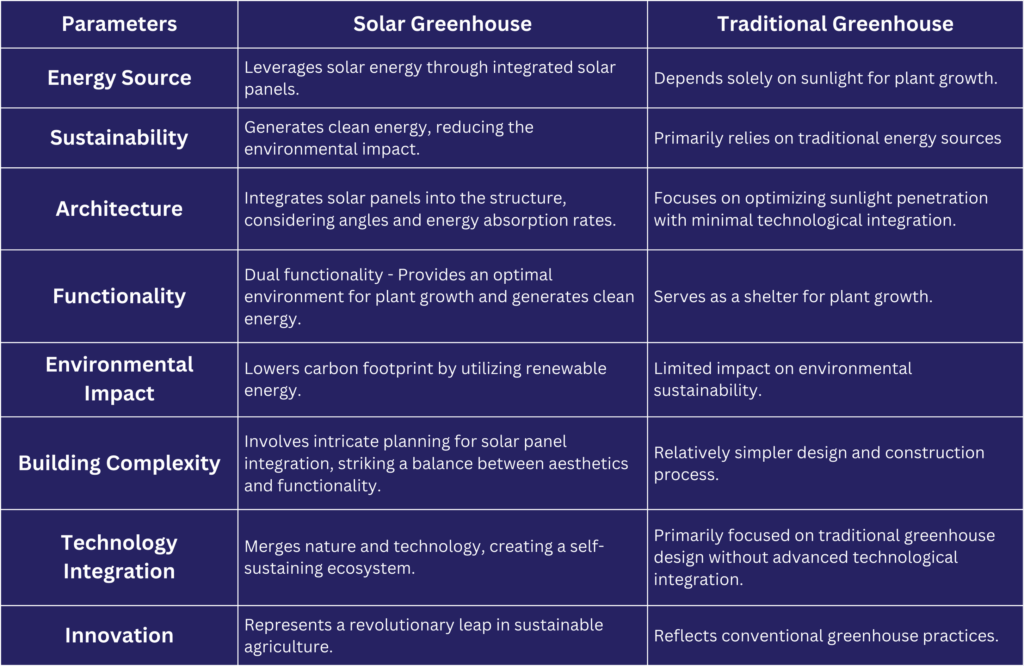
Working of Solar Greenhouse
Solar panels designed for greenhouses function as an integrated system, integrating state-of-the-art technology with the traditional method of greenhouse farming. Solar panels for greenhouse structures represent a significant advancement towards energy-efficient and sustainable agricultural methods, not just an addition.
The operational mechanisms of photovoltaic cells, the fundamental components that transform sunlight into electrical energy, underpin the functioning of solar panels for greenhouses. These cells, which are commonly constructed from semiconductor materials such as silicon, convert the energy of photons in sunlight into direct current (DC) electricity by generating an electron flow.
The greenhouse’s capacity to generate electricity is optimized by strategically positioning solar panels to absorb maximum sunlight. The design must factor in elements such as the location’s latitude, the angle of the panels, and seasonal variations in sunshine, ensuring impeccable efficiency throughout the year. This approach guarantees that a greenhouse with solar panels achieves peak performance in utilizing solar energy for both plant growth and clean power generation.
How to Build a Solar Powered Greenhouse?
Once you understand the mechanism of solar panels for a greenhouse, it is quicker and easier to understand how it is built in the production facility. So, the following are the steps you must keep in mind:
Solar greenhouse panel placement: Arrange the panels strategically inside the structure. Choose the optimal orientation and tilt angles to maximize solar absorption and energy absorption.
Selecting High-Efficiency Panels
Solar Panels in Greenhouse Design
Collaborate with architects to seamlessly integrate solar panels into greenhouse design. The technology should meld with the greenhouse’s natural surroundings, considering both aesthetics and utility. This symbiotic integration ensures functional and visually pleasing solar panels for greenhouse structures.
Installing inverters to convert DC solar energy to AC will provide the electrical infrastructure. Incorporate a battery storage device for energy efficiency in low sunlight.
Automation and Maintenance
Automate greenhouse temperature, humidity, and light. To ensure smooth functioning, plan frequent panel cleaning and electrical component checks.
Advantages of a Solar Greenhouse
Sustainable Energy Harvesting
Crop Cultivation All Year
Cost-Effective
Environmental Stewardship
Technological Innovation
Innovating sustainable farming practices, solar-powered greenhouses represent a technological leap. Beyond individual benefits, they enhance community awareness, fostering a deeper understanding and acceptance of renewable energy integration in modern agriculture. This blend of technology and environmental consciousness positions solar greenhouses as beacons of innovation, influencing both individual farmers and the broader community towards a more sustainable future.
Pave the Way for Greenhouse Sustainability
As the investigation into solar greenhouses draws to a close, it is clear that solar panel integration into greenhouse structures is a critical step forward for sustainable agriculture.
By using renewable energy, greenhouses with solar panels bring in a new age of self-sufficiency. This lowers operating expenses while maintaining a steady and regulated climate for year-round, ideal plant development. How to construct a solar-powered greenhouse highlights the importance of placing solar panels strategically inside the building to turn it into an energy center and reduce its need for external power sources.
Vishakha Renewables is the top provider of components of solar energy solutions in India with the quickest rate of growth. We provide complete solar solutions, with:
solar backsheets, and
Solar glass being our main offerings.
These are essential parts of solar modules, which convert limitless sun energy into clean electricity.
We are dedicated to using green technologies to advance human progress by using natural resources.
Answering More Questions About Solar Panel and Greenhouse
Can you Power a Greenhouse with Solar Panels?
Backsheets serve a critical function in protecting photovoltaic cells from detrimental and exceedingly high temperatures. They prevent the cells from being exposed to high-energy radiation that may induce thermal stress, injure the cells, or reduce their efficacy by functioning as a protective barrier.
How Solar is Used in a Greenhouse?
In plantings, solar panels are put in specific ways to use the sun’s energy. These panels collect sunshine and turn it into electricity. The electricity powers different greenhouse operations, like controlling temperature, humidity, and watering systems so that plants can be grown efficiently and under control.